Saxophone Products
- 01Alto Saxophone
- 02Tenor Saxophone
- 03Soprano Saxophone
- 04Baritone Saxophone
- 05C-Melody Saxophone
- 06Bass Saxophone
- 07Mouthpiece
- 08Reed
- 09Cork Grease
- 10Polishing Cloth
- 11Bags Case
- 12Stand
How To Choose
- 01Entry-Level Saxophone Player
- 02Intermediate Saxophone Player
- 03Professional Saxophone Player
- 04Junior / Kids
Quality Control
Links
- 01Musical Instruments Factory
- 02Trombone for Sale
- 03Brass Instrument In China
- 04Flute & Piccolo
- 05Clarinet & Oboe & Bassoon
- 06Electric Guitar Factory
- 07Trumpet in China
- 08Woodwind Instruments
- 09Alto Saxophone for Sale
- 10Soprano Saxophone for Sale
- 11Baritone Saxophone for sale
- 12Tenor Saxophone for sale
Saxophones We Are Making
Welcome you to have a visit of CANEX Saxophone ! |
|
|
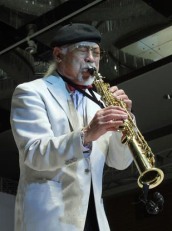
We have been manufacturing Saxophones the year 1997 and OEM Saxophones for our international distributors and musical instruments shop, With the development of the past years, right now we have expanded our production line to Alto Saxophone, Tenor Saxophone, Soprano Saxophone, Baritone Saxophone, Bass Saxophone, customized saxophones etc and the relative accessories. And whats more, the recent years, we have attracted the attention from some famous brands, to be one of their suppliers in China to manufacture some specified models for them.
The instruments that we are offering saxophones for the Entry-Level Players, Semi-Professional and Professional Players. You can easily find our instruments react quickly and flexible, comfortable to perform, special in humanizing design, usefulness and practicality, and durable for use.
|
 |
Please browsing our website to get a feel for the products we offer and services we provide. If you have any questions or would like to receive a quotation, do not hesitate to contact us for your interested product, service and logistical needs. |
|
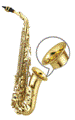 |
Alto SaxophoneThe alto saxophone is a member of the saxophone family of woodwind instruments invented by Belgian instrument designer Adolphe Sax in 1841. It is smaller than the tenor but larger than the soprano, and is the type most used in classical compositions. The alto and tenor are the most common types of saxophone.
A saxophone is basically a woodwind instrument, in which sound is generated by blowing into a hollow cylinder against a vibrating reed.  |
 |
Tenor SaxophoneThe tenor saxophone is a medium-sized member of the saxophone family, a group of instruments invented by Adolphe Sax in the 1840s. The tenor, with the alto, are the two most common types of saxophones. The tenor is pitched in the key of B, and written as a transposing instrument in the treble clef, sounding a major ninth lower than the written pitch. Modern tenor saxophones which have a high F key have a range from B2 to E5 and are therefore pitched one octave below the soprano saxophone. |
 |
Soprano SaxophoneThe soprano saxophone is a variety of the saxophone, a woodwind instrument, invented in 1840. The soprano is the third smallest member of the saxophone family, which consists (from smallest to largest) of the soprillo, sopranino, soprano, alto, tenor, baritone, bass, contrabass and tubax. |
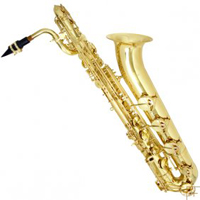 |
Baritone SaxophoneThe baritone saxophone, often called "bari sax" (to avoid confusion with the baritone horn, which is often referred to simply as "baritone"), is one of the larger and lower pitched members of the saxophone family. It was invented by Adolphe Sax. The baritone is distinguished from smaller sizes of saxophone by the extra loop near its mouthpiece; this helps to keep the instrument at a practical height (the rarer bass saxophone has a similar, but larger loop). |
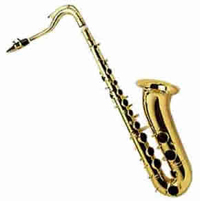 |
C - Melody SaxophoneThe C melody saxophone is a saxophone pitched in the key of C, one whole step above the tenor saxophone. In the UK it is sometimes referred to as a "C tenor", and in France as a "tenor en ut". A C melody saxophone is larger than an alto and smaller than a tenor. |
 |
Bass SaxophoneThe bass saxophone is the second largest existing member of the saxophone family (not counting the subcontrabass tubax). It is similar in design to a baritone saxophone, but it is larger, with a longer loop near the mouthpiece. |
What Can We Do
The professional team From CANEX Music is trying to give you as much information as we can , to help you select suitable saxophones right for you, teach students new to this field some simply instruction how to play, and also supply some guide for Normal Maintenance & Cleaning, Repair, etc. We are looking for long time cooperation with you, and wish you happy experience with our saxophones!
At CANEX Music your dedicated salesman will provide pricing, supply product information, coordinate shipping details, and process your order from start to finish. Helping to grow your business is truly the benchmark we use to measure our own success.
Who We Are? |
|
|
CANEX Saxophone company serving the relative Entry-Level, Intermediate-Level, & Professional level Saxophones to the players.Today, CANEX Music no longer sees itself just as a company that sells products to customers, but rather one that develops integrated supply solutions for its customers. It is our goal to provide a wide array of Music Instrument line and service solutions to our customers. In services, we offer OEM Production saxophone, just on time quality, delivery and logistics support to provide added value to our customers.
We are training our workers every month to improve our quality by 13 technical staffs team by our customers' advices in past years, and we got a good feedback form our customers. |
|
|
Our program style of marketing provides market penetration and logistical support for our suppliers and low cost, high valued solutions for our customers. The basic principles on which our company was founded remain our most valued principles today - honesty, integrity, loyalty, respect - and have allowed us to build long lasting relationships with our material suppliers, our customers and our employees. We add to these basic values many years of industry knowledge, experience and dedicated service. The combination of these values, our knowledge, experience, and service define who we are. The first concept an employee learns at CANEX Music is the importance of promoting and protecting this image. Therefore, every member of the CANEX Music becomes an important building block for our future. "One for all and all for one" is not just a saying at CANEX - it's our culture.
|